Heat Pump Guide
Understanding Heat Pump Running Costs in the Waikato
Heat pump power bills depend on how you use the system and the efficiency of your home. This guide covers how to manage running costs for homes in Hamilton, Cambridge, and Morrinsville.
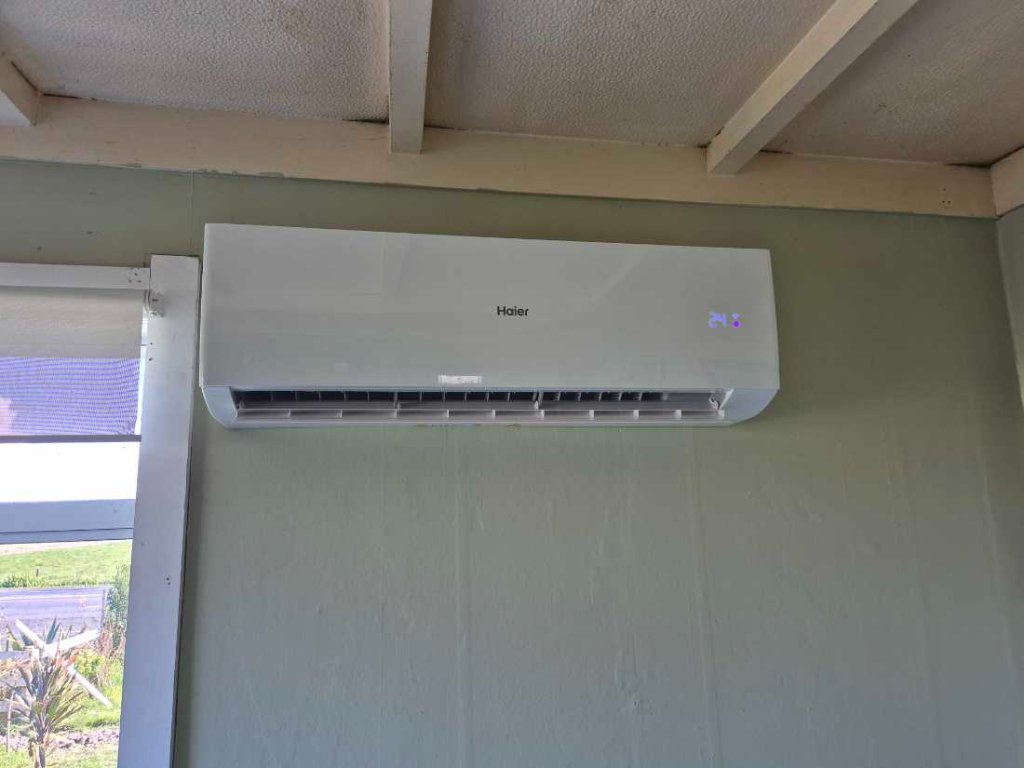
How Heat Pumps Actually Work
When you buy a heat pump, you are buying a machine that transfers heat rather than creating it. It takes thermal energy from the outside air and moves it inside. Because it is moving heat instead of generating it through a wire element, it uses significantly less electricity to achieve the same temperature increase. This efficiency is measured by the COP, or Coefficient of Performance. A higher COP means the unit is more efficient at turning electricity into heat.
However, the performance of any heat pump is tied to the temperature outside. Here in the Waikato, we deal with damp, foggy mornings in Hamilton and hard frosts in places like Cambridge and Morrinsville. When the outside temperature drops, the heat pump has to work harder to find heat in the air. As the temperature falls, the efficiency drops too. Modern inverter units manage this well by adjusting their speed rather than just switching on and off, which helps keep power usage steady.
Understanding Your Power Bill
It is a mistake to think of a heat pump as a set-and-forget appliance that will cost a specific amount every month. Your power bill is affected by several variables:
- The size of the space you are heating relative to the kW capacity of the unit.
- How well your home holds that heat. An older, uninsulated villa in Hamilton will lose heat far faster than a modern build, meaning the pump runs more often.
- The difference between your desired indoor temperature and the actual outdoor temperature.
- How often you clean the filters. A clogged filter restricts airflow, forcing the unit to work longer to move the same amount of air.
If you set your heat pump to 25 degrees in the middle of a cold snap, the unit will run at maximum capacity for longer. If you set it to a sensible 19 or 20 degrees, it can maintain the temperature using much less power. The goal is to let the unit reach the temperature and then just tick over.
Heating a Room vs Heating a House
A common point of confusion is whether one large unit can heat an entire house. A high-wall unit is designed to heat a specific room or an open-plan space. If you install a unit in the lounge and try to force the heat into bedrooms down a hallway, the unit will run constantly to compensate for the heat loss. This leads to high power bills and uneven comfort.
For larger homes or older houses with multiple rooms, a ducted system is often more efficient because it distributes heat evenly. If you have an older brick home with limited insulation, you might find that a high-wall unit is enough for the living area, but it will not make your bathroom or back bedroom warm. Relying on one unit to heat the whole house is usually a false economy.
Managing Your Running Costs
Efficiency is mostly about good habits. You can keep your power usage down by following a few simple steps. First, keep your doors and windows closed while the unit is running. Second, make sure the outdoor unit is kept clear of debris like leaves or grass clippings, as this ensures the refrigerant circuit can exchange heat efficiently. Third, keep your curtains closed as soon as the sun goes down. This acts as a barrier and reduces the workload on your heat pump.
It is also worth noting that heat pumps occasionally go through a defrost cycle. When it is very cold and damp outside, ice can form on the outdoor coil. The unit will temporarily reverse its cycle to melt this ice. You will see the fan stop or notice a brief change in noise; this is normal operation and is part of the unit maintaining efficiency. If the unit stays in defrost mode for long periods, or if you notice it is struggling to heat, it might be time for a service. You can read more about what a heat pump service costs in NZ if you suspect your unit is not running as well as it should.
Installation Options with 2E Electrical
If you are looking for a new system, we provide expert advice on sizing and placement for your specific home layout. For those interested in standard back-to-back installations, we offer the following options. Please note that prices are based on a standard back-to-back installation and include GST. Final pricing is subject to site assessment. Additional charges may apply for non-standard installations, additional electrical work, extended pipework or difficult access.
- Haier 2.5/3.2 kW from $1,975 incl GST
- Fujitsu / General 2.5/3.2 kW from $2,200 incl GST
- Haier AS50PFHRA-SET 5.0/5.3 kW from $2,400 incl GST
- Fujitsu / General 5.0/6.0 kW from $3,000 incl GST
We specify Fujitsu / General because the technology remains industry-leading. Please be aware that Fujitsu air conditioning products have transitioned to the General brand, with the same technology and performance now sold under the General name. If you need maintenance for an existing unit, a residential heat pump service is $160 including GST per unit.
Where to go next
For professional guidance on selecting the right system for your home, our team at 2E Electrical is here to help. Whether you are ready for Heat pump installation in Hamilton or need to book Heat pump servicing in Hamilton, we provide reliable service across the region. We also offer Heat pump repairs in Hamilton and specialist advice for Hot water heat pumps in Hamilton. We support homeowners throughout the Waikato, including Heat pumps across Hamilton, Heat pumps in Cambridge, and Heat pumps in Morrinsville. To discuss your heating requirements, you can Talk to 2E Electrical directly.
Frequently asked questions
Need a hand with your heat pump?
2E Electrical installs and services heat pumps across Hamilton and the Waikato. Call 0800 233 532 or request a free in-home assessment.
Talk to a local heat pump specialist
Free in-home assessments across Hamilton, Cambridge, Morrinsville and the wider Waikato.